
Bicycle Accident Lawyers in Coeur d’Alene
A bicycle crash in Coeur d’Alene can turn an everyday ride into medical appointments to treat your injuries, missed work, overwhelming insurance questions, and pain that follows you into everyday routines. Drivers may blame visibility, road position, or quick movement before anyone studies the bicycle damage, impact location, witness accounts, or injury record. Bicycle accident lawyers in Coeur d’Alene focus on what the driver did, how the crash happened, and what recovery now requires. Goldberg & Loren represents injured cyclists who need the claim built around evidence instead of assumptions.
Your case should show the full effect of being hit without the protection of a vehicle around you. A damaged bike, helmet impact, road rash, fractures, head symptoms, and mobility limits can all reveal how serious the collision became. Bicycle accident lawyers in Coeur d’Alene can review crash evidence, medical documentation, insurance issues, and compensation concerns before settlement pressure begins. Call Goldberg & Loren today at (208) 886-1120 for a free consultation from one of our bicycle accident lawyers in Coeur d’Alene.
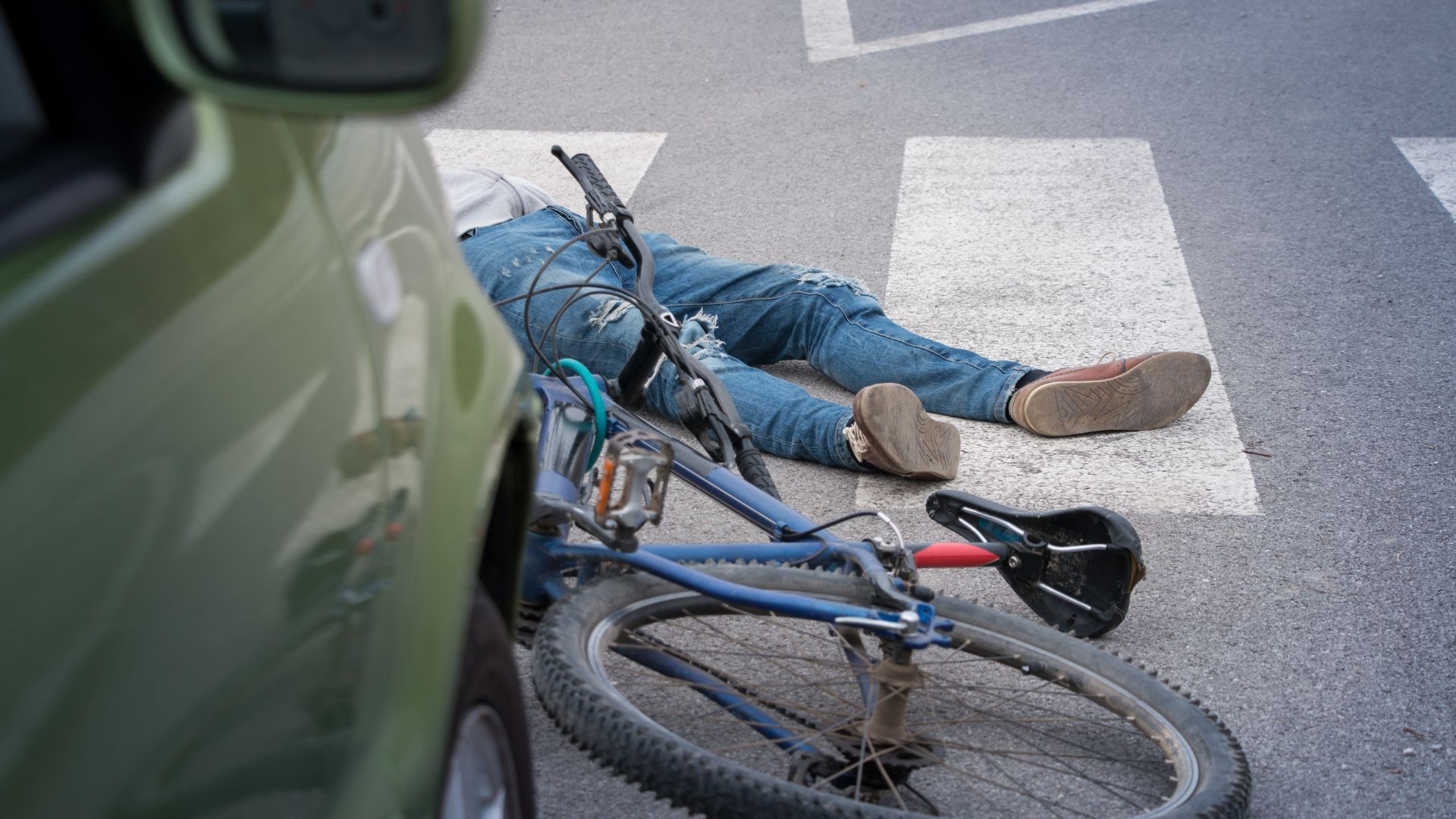
Common Causes of Bicycle Accidents in Coeur d’Alene
Bicycle accidents often begin with a driver failing to recognize how little protection a cyclist has during a traffic conflict. A rushed turn, narrow pass, distracted glance, or opened door can place a rider directly in the path of impact. Goldberg & Loren reviews these crashes by focusing on driver movement, cyclist position, roadway space, and the timing before contact. That review keeps the claim from being reduced to unfair assumptions about where the cyclist was riding.
The cause of a bicycle crash should be supported by evidence rather than guesswork. Photos, witness statements, bicycle damage, helmet marks, traffic details, medical records, and driver statements can all explain how the collision developed. A strong claim connects the cause of the crash to the injuries, bike damage, and recovery problems that followed. That structure gives the cyclist’s side of the story more legal weight.
Drivers Turning Across a Cyclist’s Path
Turning collisions often happen when a driver watches larger traffic but misses a cyclist moving through the same area. A driver might turn left across an approaching bicycle or turn right too closely beside a rider. These crashes often leave cyclists with no realistic space or time to avoid impact. Vehicle angle, impact location, bicycle damage, and witness accounts can show whether the driver failed to yield properly. Turning evidence often reveals preventable driver inattention.
Right Turns Can Trap Nearby Cyclists
Right-turn crashes often happen when a driver passes a cyclist, then cuts across the rider’s path without leaving enough room. The cyclist may be forced toward the curb, parked vehicles, or direct contact with the turning vehicle. Damage patterns, vehicle position, and witness accounts can explain why the rider had no safe escape.
Left Turns Create Severe Impact Risks
Left-turn crashes often place cyclists directly in front of a vehicle crossing their travel path. The driver may misjudge the cyclist’s distance, ignore their visibility, or turn before the rider clears the area. Impact location, traffic movement, and injury patterns can strongly support driver fault.
Unsafe Passing Near Bicycle Traffic
Unsafe passing creates danger when drivers underestimate how much room cyclists need to stay balanced and predictable. A vehicle that passes too closely can push a rider toward curbs, debris, parked cars, or uneven pavement. The cyclist may swerve, brake suddenly, or lose control while trying to avoid contact. Photos, bike damage, lane position, and nearby witness statements can show how little space the driver left. Passing distance often becomes a key fault issue.
Close Passing Can Force Dangerous Evasion
A close pass can force a cyclist to react instantly before the rider understands the driver’s next movement. That reaction may look sudden later unless the vehicle’s position and available roadway space are reviewed. Evidence can show that the cyclist swerved because the driver created the danger.
Side Contact Leaves Physical Clues
Side contact may damage handlebars, pedals, mirrors, clothing, shoes, or the bicycle frame. Those marks can show whether the vehicle moved too closely beside the cyclist before impact. Preserved damage helps prove unsafe passing when the driver gives a different account.
Distracted Driving Around Cyclists
Distracted drivers may fail to notice a cyclist until braking or steering no longer prevents impact. Phones, navigation screens, passengers, food, and vehicle controls can pull attention away during the seconds that matter most. Cyclists are especially vulnerable because drivers must watch for smaller profiles, slower movement, and changing road position. A distraction-related crash may involve drifting, delayed braking, unsafe turning, or missed traffic signals. Driver attention deserves close review after any bicycle collision.
Phone Use Can Explain Delayed Reaction
Phone use can reduce the time a driver has to identify a cyclist and respond safely. Even a brief glance away becomes dangerous when a rider is nearby and traffic conditions change quickly. Records, witness accounts, and driver behavior after impact may support distraction arguments.
Navigation Distraction Can Affect Lane Control
Navigation distraction can pull a driver’s eyes away from the cyclist’s position and nearby traffic movement. That loss of attention may lead to drifting, sudden turns, poor spacing, or delayed braking. Lane movement evidence can support the cyclist’s account when distraction becomes disputed.
Parked Cars and Dooring Accidents
Dooring crashes happen when someone opens a vehicle door into a cyclist’s path without checking for approaching riders. The cyclist may have only seconds to choose between hitting the door, swerving into traffic, or falling onto the pavement. These crashes often cause shoulder trauma, head injuries, wrist fractures, knee damage, and deep abrasions. Door angle, parked vehicle position, bicycle path, and witness statements can explain why the crash was unavoidable for the rider. Dooring accidents often reflect preventable carelessness.
Open Doors Create Immediate Road Hazards
An opened door can block a cyclist’s travel path before the rider has enough distance to stop. The danger becomes worse when traffic leaves no safe room to move around the vehicle. Door position, nearby lane space, and impact marks can show why the cyclist could not avoid contact.
Parked Vehicle Evidence Needs Preservation
Photos of the parked vehicle can show door angle, curb distance, available roadway space, and the cyclist’s likely path. Witness accounts may explain how quickly the door opened and whether the occupant looked before exiting. Early preservation protects details that disappear once the vehicle moves.
How Idaho Liability Laws Affect Bicycle Accident Claims
Idaho liability laws can shape both fault and compensation after a bicycle crash. Cyclists have rights and duties similar to other roadway users, which means insurers often review rider conduct along with driver behavior. Bicycle accident lawyers in Coeur d’Alene examine whether the driver failed to yield, passed unsafely, opened a door into travel, turned across the rider, or ignored traffic conditions. The same review also considers whether the cyclist followed traffic rules, used reasonable care, and responded safely to the danger created before impact.
Fault arguments matter because Idaho uses comparative responsibility in injury claims. Compensation may be reduced if the cyclist shares responsibility, and recovery can become unavailable if the cyclist’s share of fault is as great as the other party’s. Insurance companies may use that rule to argue the rider caused or contributed to the crash. Strong evidence helps keep fault percentages tied to facts rather than assumptions about bicyclists.
Bicycle Riders Have Roadway Rights and Duties
Idaho law generally treats bicycle riders as having the rights and duties that apply to drivers when those rules fit bicycle travel. That means a cyclist’s roadway position, signaling, yielding, and movement may all become part of the liability review. It also means drivers cannot dismiss a rider’s claim simply because the injured person was on a bicycle. Bicycle accident lawyers in Coeur d’Alene use this framework to show how both driver duties and rider conduct should be evaluated. The claim becomes stronger when legal responsibility is matched to the actual crash facts.
Driver Duties Still Apply Around Cyclists
Drivers must account for cyclists when turning, passing, merging, and approaching shared traffic space. A driver who fails to look, leaves too little room, or misjudges a rider’s position may create preventable danger. Those choices can support liability when evidence connects them to the crash.
Cyclist Conduct Needs Fair Evaluation
Cyclist conduct should be reviewed through traffic rules, road conditions, visibility, and the rider’s available reaction time. Insurers sometimes isolate one rider decision without considering what the driver did first. A fair review prevents blame from being assigned without context.
Comparative Fault Can Reduce Compensation
Comparative fault can become one of the biggest issues in a bicycle accident claim. An insurer may argue the cyclist rode too far into traffic, failed to signal, traveled too quickly, or did not avoid the vehicle. Those arguments can reduce compensation if evidence supports partial rider responsibility. The legal dispute often becomes a fight over percentages, not only whether the driver did something wrong. Early evidence can protect the value of the claim.
Fault Percentages Affect Settlement Value
Fault percentages can change how much compensation an injured cyclist receives. Even a small assigned percentage may reduce payment for medical bills, lost income, and pain. Evidence should answer fault claims before settlement numbers are discussed.
Equal Fault Can Block Recovery
If the cyclist’s responsibility is found as great as the driver’s responsibility, recovery can become unavailable. That risk makes blame arguments extremely important during insurance negotiations. Strong proof helps prevent unfair fault assignments from controlling the outcome.
Sidewalk and Crosswalk Rules May Matter
Bicycle crashes sometimes involve sidewalks, crosswalks, parking lot exits, driveways, or places where bicycle and pedestrian rules overlap. Idaho law addresses bicycle use on sidewalks and crosswalks, including duties involving pedestrians and posted restrictions. Those facts can affect liability when a driver claims the cyclist entered unexpectedly or used the wrong area. The claim should examine signs, traffic controls, travel direction, visibility, and the driver’s opportunity to avoid impact. Location details can change how responsibility gets evaluated.
Crosswalk Travel Changes the Legal Review
Crosswalk evidence may show whether the cyclist had pedestrian-like protections under the circumstances. The review should consider signals, traffic controls, driver movement, and whether bicycle use was prohibited nearby. These details help answer driver claims about improper crossing.
Sidewalk Restrictions Need Actual Proof
Sidewalk restriction arguments should be supported by traffic control devices, signs, photographs, and local conditions. A driver’s claim that the cyclist rode improperly does not prove a rule violation. Actual proof keeps liability arguments grounded in evidence.
Evidence Protects Riders From Blame Arguments
Liability laws only help when the facts are documented clearly. Photos, witness statements, bicycle damage, helmet marks, driver statements, medical records, and scene details can show how the collision happened. Bicycle accident lawyers in Coeur d’Alene use that evidence to respond when insurers argue the rider shared responsibility. The goal is to connect legal duties to real conduct instead of allowing broad claims about bicyclists to shape settlement value. Evidence gives the claim stronger protection against unfair blame.
Scene Details Clarify Legal Responsibility
Scene details can show lane position, vehicle movement, sightlines, traffic controls, and available space before impact. Those facts help determine whether the driver, cyclist, or both contributed to the crash. Detailed scene evidence supports a more accurate liability review.
Medical Records Support Causation and Damages
Medical records connect the crash to injuries, treatment needs, work limits, and recovery problems. They also help explain why the collision caused harm beyond bicycle damage alone. Strong documentation supports both liability and compensation.

How Goldberg & Loren Pursues Compensation After Bicycle Accidents in Coeur d’Alene
Goldberg & Loren pursues bicycle accident compensation by building the claim around the rider’s real losses, not only the most obvious bills. A crash involving a bicycle often creates medical costs, missed income, damaged gear, transportation problems, and pain that changes ordinary routines. The firm reviews each category of loss before an insurer reduces the claim to a narrow settlement number. Bicycle accident lawyers in Coeur d’Alene use organized documentation to show why the rider’s recovery deserves serious financial attention.
Compensation also depends on proving how the driver caused the crash and how the injuries developed afterward. A strong demand connects liability evidence with treatment records, work limitations, bike damage, and future care needs. Goldberg & Loren prepares that connection before negotiations begin, which gives the claim stronger support against low offers. A complete damages record protects the rider from rushed insurance decisions.
Valuing Medical Care and Future Treatment Needs
Medical compensation begins with emergency care, imaging, prescriptions, follow-up visits, therapy, and specialist evaluations after the bicycle crash. Goldberg & Loren reviews the treatment record to show how the injuries progressed and why additional care became necessary. This review matters when insurers argue that a rider’s pain improved faster than the medical record actually shows. Future treatment needs also deserve attention before any settlement release closes the claim permanently. Medical value should reflect the full recovery path, not one early appointment.
Treatment Records Explain Recovery Costs
Treatment records show diagnoses, provider recommendations, pain levels, and medical restrictions after the crash. These details explain why care continued beyond the first visit. Strong documentation prevents insurers from minimizing necessary treatment.
Future Care Protects Long-Term Recovery
Future care may involve therapy, imaging, injections, specialist follow-up, or surgical evaluation. These needs deserve valuation before the settlement paperwork ends the claim. Early planning protects riders from unpaid medical expenses.
Documenting Lost Income and Daily Limitations
A bicycle accident can interrupt work even when the rider wants to return quickly. Injuries may limit lifting, standing, sitting, driving, typing, walking, or performing physical job duties. Goldberg & Loren reviews pay records, employer notes, schedules, and medical restrictions to support lost income claims. Daily limitations also matter because pain often affects errands, sleep, transportation, childcare, and household responsibilities. Those details help show how the crash changed life outside medical appointments.
Employment Records Support Missed Wages
Employment records can confirm missed shifts, reduced hours, unpaid leave, or changed job duties. These documents give wage loss claims stronger support than personal memory. Written proof limits disputes about financial harm.
Daily Restrictions Show Broader Losses
Daily restrictions may affect cooking, cleaning, shopping, commuting, sleeping, and family responsibilities. These limitations show how injuries disrupted more than employment alone. Practical examples strengthen the damages presentation.
Including Bike Damage and Out-of-Pocket Costs
Bicycle crash compensation should include property losses and smaller expenses that build pressure during recovery. A damaged bike, broken helmet, torn clothing, replacement transportation, prescriptions, parking, and medical travel can all create real financial strain. Goldberg & Loren reviews receipts, repair estimates, photographs, and replacement costs to identify losses that belong in the claim. These costs may look minor compared with hospital bills, but they still came from the driver’s conduct. Every documented expense helps complete the compensation picture.
Repair Estimates Show Property Loss
Repair estimates can identify frame damage, wheel damage, brake problems, and replacement needs. These records help prove that the bicycle crash caused measurable property loss. Bike damage also supports the impact story.
Receipts Preserve Recovery Expenses
Receipts can document prescriptions, rides, medical travel, parking, and replacement safety gear. These records prevent insurers from ignoring smaller costs during settlement review. Organized expenses make the claim more complete.
Preparing Settlement Demands With Strong Liability Proof
A settlement demand becomes stronger when compensation is tied directly to fault evidence. Goldberg & Loren connects driver conduct, scene photos, witness statements, bicycle damage, medical records, and financial losses into one organized presentation. This approach prevents insurers from separating damages from the negligence that caused them. Liability proof matters because Idaho fault arguments can affect how much compensation the rider receives. A demand backed by evidence gives negotiations a stronger direction.
Driver Conduct Anchors the Demand
Driver conduct may involve unsafe passing, turning across the cyclist, distraction, or failure to yield. Connecting those actions to the rider’s injuries strengthens the settlement demand. Fault evidence keeps negotiations focused on responsibility.
Organized Proof Answers Low Offers
Low offers often ignore future care, daily limitations, and disputed liability facts. Goldberg & Loren responds with records showing why the claim deserves more. Organized proof protects compensation from unfair reduction.
Start a Free Bicycle Accident Case Review From Goldberg & Loren Today
A bicycle crash can lead to you dealing with pain and insurance blame before your recovery is even understood. The driver’s excuses about visibility, lane position, speed, or road conditions should not decide what your claim is worth. Instead, your medical records, damaged gear, repair costs, witness details, and Idaho liability issues deserve a full review before settlement talks begin. Goldberg & Loren can help organize the proof and protect your claim from being reduced too early.
Bicycle accident lawyers in Coeur d’Alene can explain which losses should be included, how fault may affect compensation, and what evidence strengthens your position. Your claim should account for treatment, income loss, transportation problems, daily limitations, bike replacement, and future recovery needs. Goldberg & Loren reviews the crash from the rider’s perspective while keeping the driver’s conduct at the center of the claim. Call Goldberg & Loren at (208) 886-1120 or visit our contact page today for a free consultation from one of our bicycle accident lawyers in Coeur d’Alene.
Practice Areas
Trust Us With Your Personal Injury Claim
If you or a loved one have been injured, Goldberg & Loren will fight for you every step of the way. We will give our all to secure the compensation you rightfully deserve.


Contact usfor a free consultation.
Phone: (208) 886-1120